
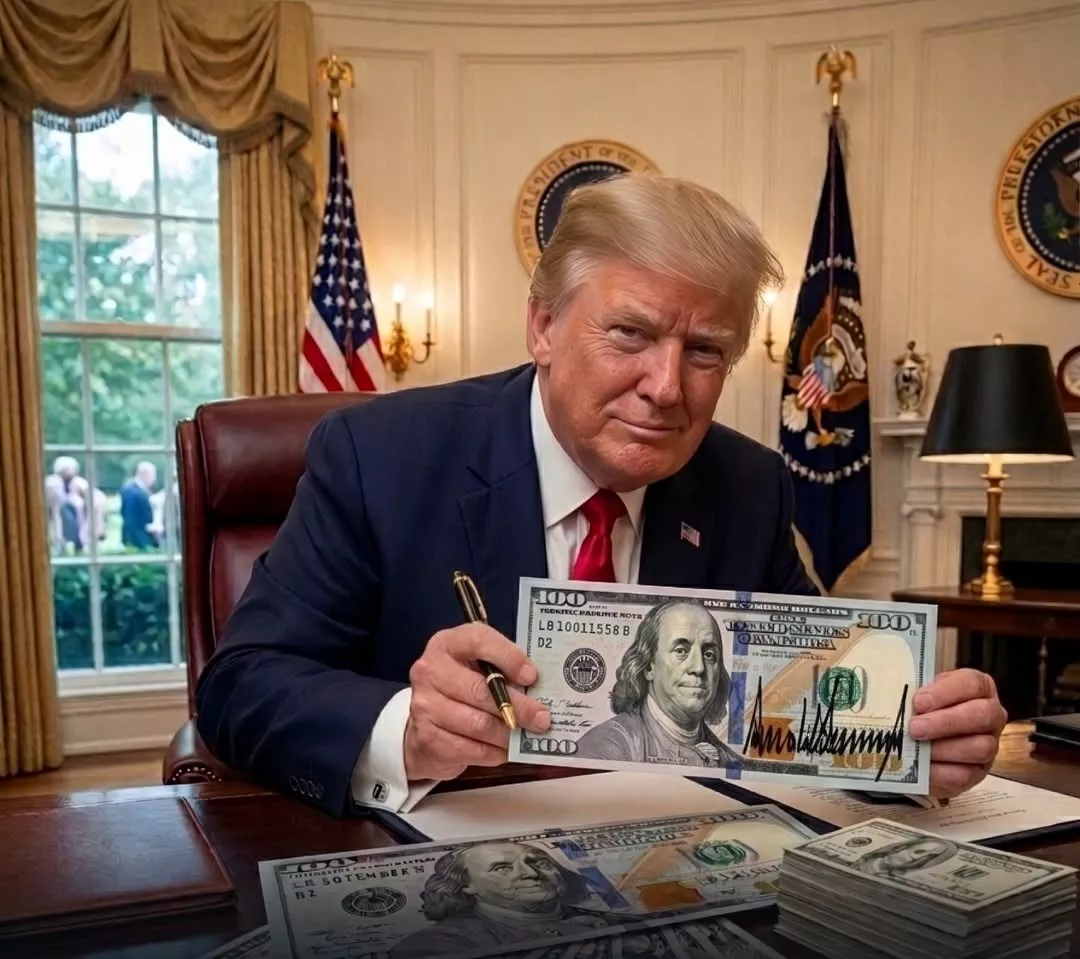
In a move that signals a striking shift in both design and symbolism, the United States is preparing to introduce a new chapter in its paper currency. Beginning with $100 bills printed in June 2026, upcoming notes will feature the signature of Donald Trump alongside that of Treasury Secretary Scott Bessent—while the traditional signature of the U.S. Treasurer is set to be removed.
This marks a historic first in modern American currency. Since 1861, U.S. banknotes have carried signatures intended to reflect institutional continuity rather than individual leadership. The introduction of a sitting president’s signature represents a notable departure from that long-standing tradition.
For decades, the visual language of currency has been carefully curated to project stability, neutrality, and distance from political identity. Money, by design, has symbolized the system rather than the individual. By incorporating a president’s signature, this balance subtly shifts—bringing a more personal dimension to what has always been a national, rather than executive, emblem.
Beyond aesthetics, the change raises broader questions about how power is expressed. Currency is more than a medium of exchange; it is a statement of identity, authority, and trust. What appears on it often reflects how a nation chooses to present itself—not only to its citizens, but to the world.
With this evolution, American cash moves into a space where design, politics, and symbolism intersect more visibly than ever before.